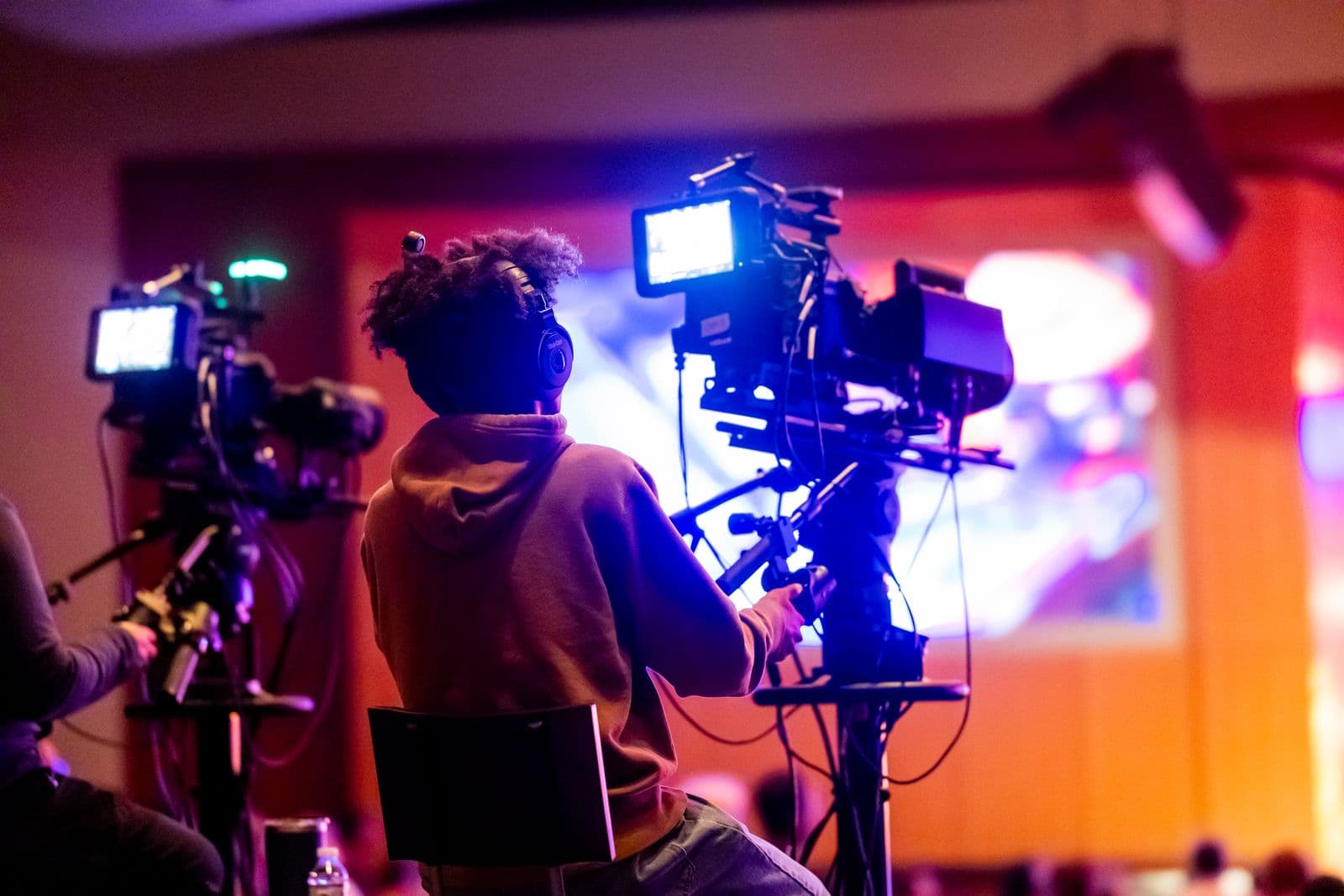
The calmest events you've ever worked were not run by the calmest people. They were run on systems built in advance, so that on the day itself nobody has to summon energy, improvise structure, or remember who's supposed to be doing what. Chaos on-site is almost never a personnel problem. It's a systems problem that surfaces at the worst possible time, usually right as doors open and there's no more room to fix the underlying issue, only to react to it. Good event day-of coordination is mostly invisible. It looks like nothing happening, because everything that could go wrong already has an owner and a plan.
One show caller, one voice on cues
Every event needs exactly one person calling cues, out loud, on the shared channel, for the full duration of the show. Not two people who both feel responsible for keeping things on time. Not "whoever notices first." One named person with the run of show open in front of them, watching the clock, and calling each transition before it needs to happen, not after someone asks where the next speaker is.
Cue-calling doesn't average out when you split it between two people, it multiplies the failure modes. If AV is watching the clock and catering is too, and both call "go" on the toast at slightly different moments, you get a toast cued twice, lights that shift mid-sentence, or a silence where each assumed the other had it. There is no safe middle version of shared authority over live cues.
This doesn't mean the show caller works alone. Everyone else on the team is feeding them information: AV flags that the projector needs 90 seconds to warm up, catering flags that dessert is two minutes from being plated, the venue manager flags that the freight elevator is stuck. All of that routes to one person who decides what happens next and says so out loud. The show caller's job is synthesis and decision, not psychic prediction, so the team's job is to feed them accurate, timely information rather than quietly trying to solve it themselves and leaving the caller working off stale assumptions.
Two schedules, not one: guest agenda vs. crew run of show
A lot of first-time producers try to run the whole event off a single document, usually the guest-facing agenda they built for the invitation or program. That document says things like "6:00 PM Doors, 6:30 PM Welcome Remarks, 7:00 PM Dinner." It's fine for guests. It is not nearly detailed enough to run a show, because it has no cue points, no owners, no buffers, and no room for the fifteen small mechanical actions that have to happen between "Welcome Remarks" and "Dinner."
Build a second, separate document: the crew-facing run of show. Where the guest agenda has one line, the run of show might have six. "6:30 PM Welcome Remarks" on the crew sheet becomes something closer to: 6:27 house lights to 50%, mic check on stage mic 1, MC staged stage left; 6:29 house lights to 20%, AV cue 4 (walk-on music fades at :10); 6:30 MC walks on, AV cue 5 (spot up); 6:33 MC wraps, AV cue 6 (music under for transition), catering opens service doors. Every line has a time, an action, an owner, and often a specific AV or audio cue number that ties back to whatever cue sheet your production team is running.
The other thing the run of show needs that the guest agenda never does is load-in and load-out. Guests never see the four hours before doors when trucks arrive, tables get set, and AV runs a full technical rehearsal, but that block is often the highest-risk part of the day. Give it the same line-item treatment: load-in time, who's receiving deliveries, when the venue actually opens the room, when rehearsal starts and ends, and a hard deadline for "room must be guest-ready by." A vague "morning of" block on load-in is where a surprising number of event-day disasters actually start, hours before a single guest walks in.
- Guest agenda: broad strokes, times a guest actually needs, printed on the program or posted at check-in.
- Crew run of show: every cue, every owner, every buffer, visible to AV, MC, catering, and the show caller on one shared screen or printed sheet.
- Load-in/load-out block: treated with the same rigor as the show itself, with a hard "room must be ready by" deadline.
- Contingency notes: built into the same document, not a separate binder nobody opens under pressure.
Keep the run of show visible to everyone who needs it, ideally the same live version, not five printed copies from five different drafts. This is the single most common failure in event day-of coordination: AV is working off a printout from Tuesday, catering got a version emailed Wednesday night with two changes, and the MC has whatever's on their phone. Nobody's malicious, everyone's just reading a slightly different show. A live, shared run of show, whether that's a shared doc, a whiteboard, or a dedicated show-clock tool, means MC, AV, and catering are all reading the same screen instead of pinging the producer every fifteen minutes to ask what's next.
Comms: pick the channel and the etiquette before doors
Decide your communication setup during planning, not as doors open. For larger productions with more than roughly 40 to 50 people involved in running the show, radios are worth the rental cost: they're instant, they don't require anyone to look at a screen, and they work in venues with dead cell signal (which is most basements, ballrooms, and anywhere with a lot of steel and concrete). For smaller events, a single group thread on whatever messaging app your team already uses is enough, as long as everyone who needs to see it is actually in it before doors, not added mid-crisis.
The channel matters less than the etiquette. Set three rules before the day starts. First, messages are short: what happened, where, what you need. "Bar 2 out of white wine, need a runner" beats a paragraph of context nobody has time to read. Second, use names, not roles, when you need something specific: "Jordan, can you cover door 2 for five minutes" gets action faster than "can someone cover the door." Third, the show caller's channel stays clear for cues. If your team is sharing one channel for both operational chatter and live cues, cue calls get buried under "anyone seen the extra extension cords" at exactly the moment they matter most. If volume is high, split it: one channel for cues, one for everything else, with the show caller's calls always getting priority attention.
Also decide, in advance, who's allowed to radio the show caller directly. If every vendor rep and volunteer can interrupt with routine questions, the signal-to-noise ratio collapses right when the caller needs to be watching the clock most closely. Route routine questions to a floor manager, and reserve the caller's direct line for things that actually affect the next cue.
Briefing the people who weren't in the planning meetings
Most events run on a mix of full-time staff who've been in every planning meeting and day-of hires, volunteers, or vendor crews who show up for the first time that morning. The instinct is to hand the newcomers the same run of show everyone else has and assume it'll make sense. It won't. Someone who sat through six weeks of planning meetings has context baked in that a volunteer who arrived at 3 PM simply doesn't have, and a dense multi-page cue sheet reads like a foreign language to someone seeing it cold.
Build a role-specific one-pager for anyone who wasn't in the room during planning: door staff, registration volunteers, parking attendants, roaming ushers. Keep it to what they actually need. Their zone. Their check-in time. The two or three things they're responsible for, stated as plainly as possible ("scan every badge, if the scanner shows red, send them to the help desk, don't argue with guests about list status"). Who to contact by name or role if something goes wrong, and how (radio channel, or a specific person's cell). What "my job is done" looks like, so they're not standing around unsure whether to leave their post at 8 PM or 9.
Then walk them through it in person, standing in their actual zone, for five minutes before doors. Reading a one-pager and standing where you'll actually be working are different levels of understanding. A volunteer who's mentally rehearsed "if the line backs up past the second pillar, I open the second scanner" while physically standing next to that pillar will remember it at 6:45 PM under pressure. A volunteer who only read it on a clipboard in the green room won't.
Handling emergencies without losing the whole show
A contingency plan doesn't need to cover every conceivable disaster. It needs to cover the failures actually likely at your event: the speaker who no-shows or runs long, the AV system that drops mid-presentation, an outdoor component forced inside by weather, a catering delay that pushes dinner back. For each one, write a single line: what happens, who decides, who executes. Not a five-page binder. A plan that takes ten minutes to find during an actual crisis is worse than no plan, because it creates the illusion of preparedness without the speed preparedness is supposed to buy you.
The most useful thing you can do in the moment an emergency actually happens is separate the decision from the communication. One person (usually the show caller or a designated producer) makes the call on what happens next. A second person communicates that decision outward, to catering, to the MC, to the client if needed, so the decision-maker isn't also fielding six side conversations while trying to think. Splitting those two jobs, even for five minutes, is the difference between a fast recovery and a stalled one.
And build in a threshold for when to loop in the client or host. Minor slippage (a ten-minute delay, a swapped speaker order) is a normal day-of adjustment and usually doesn't need a client conversation mid-show. A real disruption (a canceled headline speaker, a safety issue, a venue problem that changes the plan materially) does, and it's better to have agreed in the planning phase what counts as "tell them now" versus "handle it and brief them after," rather than making that judgment call for the first time under pressure.
The pre-doors huddle
Fifteen minutes before doors, get everyone who's running the show, not every volunteer, but every lead, in one place. Read the first 30 minutes of the run of show out loud, cue by cue. This does two things a written document alone can't. It surfaces last-minute gaps (someone realizes they don't actually have the wireless mic, or the caterer's still setting up the exact table AV needs clear for a cable run) while there's still time to fix them. And it puts everyone's mental clock on the same second, so when the show caller says "6:30, doors," everyone in the room heard the same countdown, not five different interpretations of what's about to happen.
Keep the huddle to the first 30 minutes specifically, not the whole show. Reading a three-hour run of show out loud fifteen minutes before doors either runs long and delays doors itself, or gets rushed and people stop absorbing it after the first ten minutes. The opening stretch, doors through the first transition, is where nerves are highest and errors are most visible to guests, so that's the block worth the group's full attention. Trust the written document for the rest, and trust your show caller to manage it live.
Protecting the buffers: what to do when you're early or late
A run of show without buffers is a run of show that's already broken, because real events never track the paper schedule exactly. Build small buffers, five to ten minutes, at your natural transition points: after doors before the welcome, between dinner and program, before the close. Those buffers are your shock absorbers, and how you use them separates a smooth show from a visibly stressed one.
When you're running early, hold to the clock. Don't cue the next segment just because it's ready to go. Guests calibrate to the schedule they were told (verbally, on a program, or from experience with similar events) and starting things early can mean people miss the beginning because they were still at the bar or still finding their seats. Early is a gift. Bank it in the buffer, don't spend it immediately.
When you're running late, and you will be at some point, take the time out of transitions and buffers first, never out of the content people actually came for. If dinner ran eight minutes long, don't shorten the keynote to claw it back; trim the buffer before the keynote, tighten the transition after it, or shave time off a lower-stakes segment guests won't notice was compressed. Cutting into the content itself is the last resort, not the first move, because that's the part of the day people remember and the reason they showed up.
Teardown and the debrief that actually happens
Teardown deserves the same planning as load-in, and usually gets a fraction of it. Assign it before the show starts, not after, when everyone's tired and the team that stays to strike the room is whoever happened to still be standing there. Note venue-imposed hard-out times (a lot of venues charge steep overtime, or simply lock you out at a contracted hour) and work backward from that, the same way you built buffers into the show itself.
The debrief is the step most teams skip, usually because everyone's exhausted and just wants to go home, which is exactly why it needs to be short enough to actually survive contact with a tired team. Ten minutes, same day if possible, three questions: what went wrong, what almost went wrong but got caught in time, and what's the one change for next time. Write it down somewhere you'll actually find it again, attached to the event file, not in someone's head or a Slack message that scrolls away. The events that keep visibly improving year over year are the ones where the near-misses get captured while they're still fresh, not just the outright failures.
If you're building the run of show itself, our run of show template and how to write a run of show guide are good starting points, and Event70's live show clock keeps the crew-facing schedule in sync in real time instead of five different printed versions floating around the venue. If check-in and staffing the door is the piece you're still working out, see our guide on managing RSVPs. Start free and build your first run of show before your next event.