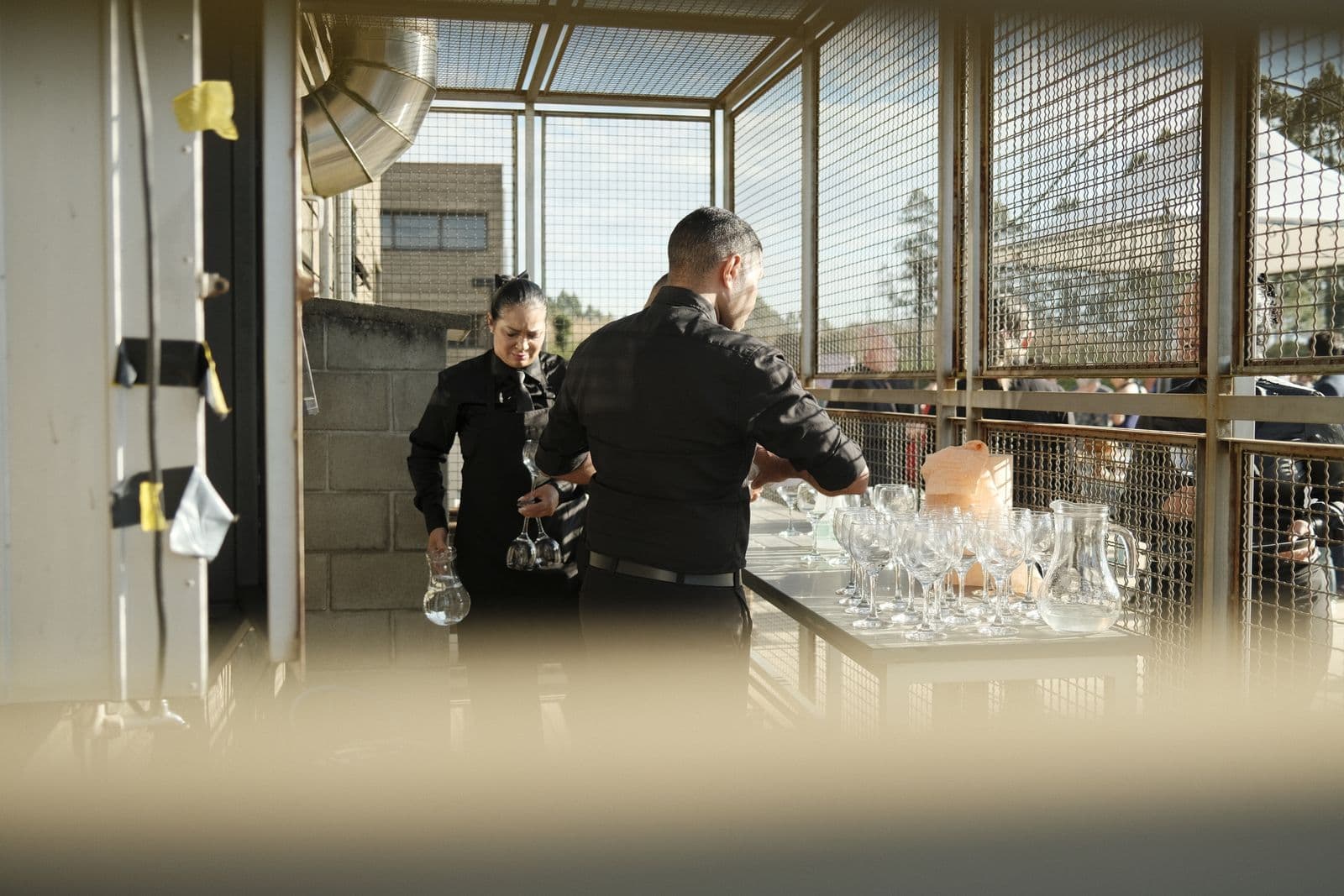
Vendors are where an event meets the real world. This is where money and risk actually concentrate. A bad run of show is embarrassing; a caterer who no-shows or a rigger who shows up without insurance can shut the event down entirely. Good vendor management means there's no ambiguity anywhere in the chain: who delivers what, by when, for how much, and who to call when the truck is running late. Most of the stress in vendor coordination doesn't come from the vendors themselves, it comes from information that only exists in one person's head or one buried email thread. Fix that and the rest gets a lot calmer.
Vetting a new vendor before you book them
The vendors that cause problems are almost never the ones you've worked with for years. They're the new ones, brought in because the usual caterer was booked or because someone found a great-looking Instagram page. A little bit of vetting up front saves a lot of scrambling later.
- Ask for two references from events similar in size and format to yours, and actually call them, not just email. A five-minute call surfaces things a written reference never will, like whether the crew showed up on time.
- Confirm they carry general liability insurance and can produce a certificate of insurance (COI) naming your organization as additional insured. Most venues require this and will not let an uninsured vendor load in.
- Ask directly how they handle a last-minute problem: a broken piece of equipment, a sick lead staffer, a delayed delivery. The answer tells you more about reliability than their portfolio does.
- Check that their capacity matches your event. A caterer who normally does 40-person dinners can struggle at a 300-person gala, not because they're bad at their job, but because the logistics are a different sport.
- Get a written quote itemized by service, not a single lump sum, so you can see exactly what you're paying for and negotiate individual lines if the budget is tight.
For recurring categories like AV, catering, and photography, keep a short list of two or three vetted vendors per category instead of starting from zero each time. When your regular caterer is booked on your date, you're not googling at 11pm, you're calling your second choice, who you've already vetted.
Insurance, licenses, and liability: the paperwork that actually matters
This is the part of vendor management that gets skipped under deadline pressure and then becomes a genuine problem. A certificate of insurance is not a formality, it's what protects your organization if a vendor's equipment injures a guest or damages the venue. Most venues will not allow load-in without a COI on file, and some require it days in advance, not the morning of.
- General liability insurance, typically $1M per occurrence and $2M aggregate, is the baseline most venues expect from any vendor handling equipment, food, or crowds.
- Liquor liability coverage is separate from general liability and is required for any vendor serving alcohol, even if it's a caterer who also runs the bar.
- Workers' comp matters if the vendor brings staff onto your site; ask whether their crew is covered, especially for subcontracted labor.
- Local permits (food service, amplified sound, pyrotechnics, tents over a certain size) are the vendor's responsibility to pull in most contracts, but confirm who's actually filing and when, since a missing permit can stop load-in cold.
Negotiating payment schedules without creating risk on either side
A payment schedule is a negotiation, not a formality to accept as written. Most vendors propose a structure that protects them; your job is to propose one that also protects you, without being unreasonable about it.
A workable structure for most mid-size events looks like this: 30 to 50 percent deposit at signing to hold the date and cover the vendor's upfront costs (ingredients, rentals, staffing commitments), a second payment due a set number of days before the event once the final headcount or scope is locked, and the balance due on delivery or within a short window after, tied to the event actually happening as agreed. Avoid paying the full amount up front except for very small, low-risk purchases. If a vendor insists on 100 percent before the event for anything sizable, treat that as a flag worth a direct conversation, not an automatic dealbreaker, but a reason to ask why.
Cancellation terms deserve the same attention as price. Know, in writing, what you owe if you cancel at 60 days out versus 7 days out, and what the vendor owes you (refund of deposit, partial refund, credit toward a future date) if they cancel. Vague cancellation language is the single most common source of vendor disputes after the fact, and it's entirely preventable at signing.
Handling a vendor who cancels close to the event
It happens. A caterer's kitchen floods, a photographer gets sick, a rental company double-books a truck. The difference between a manageable problem and a crisis is how fast you move and whether you have a plan before you need one.
Start with your contract: does it specify a replacement obligation, a refund, or a penalty? Some vendor contracts, especially with larger companies, include a clause requiring them to find or fund a comparable replacement. Next, call your short list for that category immediately, same day if possible, and be upfront that you have a firm date and need a fast yes or no. Personal referrals from your venue coordinator or from other vendors on the job often move faster than a fresh search, since they can vouch for availability and reliability on short notice. If you can't find a full replacement, look honestly at whether the event can absorb a reduced version of that service rather than nothing at all: a simpler menu from a different caterer beats no catering, a single photographer covering only the ceremony beats no photos at all.
Whatever happens, keep the rest of the day on track while you solve it. Don't let one vendor problem cascade into missed load-in windows for everyone else because the team got pulled into firefighting instead of running the schedule.
Coordinating multiple vendors on the same load-in window
The hardest logistical problem in vendor management usually isn't any single vendor, it's several of them trying to use the same loading dock, freight elevator, or parking area within the same 90-minute window. This is where events quietly fall apart: the florist is blocked from the service entrance because the AV truck is still unloading, and now everyone's running 40 minutes behind before doors even open.
- Stagger load-in times by vendor category, not just by a single generic block. Give AV and rigging the earliest slot since they often need the room empty, then catering, then florals and decor, then anything that needs a finished room like signage or place cards.
- Confirm with the venue exactly how many trucks can be at the dock at once and whether there's a freight elevator reservation system, then build your vendor schedule around that constraint instead of finding out on the day.
- Name a single on-site point of contact, either you or a team member, who each vendor's driver can call on arrival. Nothing burns time like a delivery truck circling the block because nobody answered the load-in phone number.
- Ask each vendor in advance what they need from you: power drops, tables, parking passes, a place to stage boxes. Getting this answer two weeks out instead of at load-in avoids a scramble for extension cords while a truck idles outside.
Building the vendor record that actually holds up
Every vendor, no matter how small, should live in one record with the same fields: company name, your point of contact and their mobile number, what they're providing, contract amount, deposit paid and balance owed, and current status (booked, confirmed, paid, complete). This sounds basic, but the failure mode in most events isn't a lack of information, it's that the information exists in four different places: a contract in email, a deposit note in a spreadsheet, a phone number in someone's personal contacts, and a load-in time mentioned once in a group text that got buried.
Link that vendor record to your budget so a contract change or an added service reflects automatically instead of living as a mental note you have to remember to reconcile later. When a caterer adds a bar package two weeks out, that number needs to hit your estimated-vs-actual tracking the same day, not get discovered during a post-event reconciliation when it's too late to adjust anything else.
Capture day-of details early, while the vendor is responsive and before they're buried in other clients' events closer to your date: exact load-in time, which dock or door, the on-site contact's mobile number (not the office line), what they need from you, and tear-down time. Then put every vendor's load-in and load-out directly onto the run of show as named cues with the on-site contact listed, not as a separate document nobody checks during the event. If your florist is due at 2:15pm at the loading dock and your catering lead needs the kitchen clear by 3pm, those are cues on the same timeline your whole team is already watching, not facts scattered across five separate vendor sheets.
For anything that matters (price, deliverables, cancellation terms, deposit amount) get it in writing. A verbal agreement with a vendor you've worked with for years is fine for small adjustments; anything involving real money or a hard deadline deserves a signature.
Event70's vendor tracking keeps each vendor's contact, contract, and payment status linked to the budget and the live run of show, so a load-in time isn't buried in an email while your day-of team is watching a different document. If vendor coordination is currently split across a spreadsheet, a shared inbox, and a group text, see how event vendor management fits into a broader run of show, check the event budget calculator for tracking contract amounts against actuals, or start free and add your current vendor list to see it linked to a real day-of schedule.